

News and Information
News and Information

2015-01-01
Many people are unfamiliar with both powder coating and fluorocarbon coating, so today we’ll dive deep into explaining the key differences between the two. **Powder Coating** The raw materials for powder coating include polyurethane, polyurea resin, epoxy resin, hydroxyl polyester resin, and epoxy-polyester resin—allowing for a wide range of customizable colors. **Key Features of Powder Coating:** Powder coating applications can be done manually or through automated overhead systems, making it easy to implement. The resulting coating typically has a thickness of 30 microns or more, offering excellent resistance to impact, abrasion, corrosion, and weathering. Plus, the cost of powder coatings is generally lower compared to fluorocarbon finishes. **The Biggest Weakness of Powder Coating:** It’s vulnerable to damage from sunlight and ultraviolet rays.

A restaurant is a place where families gather to dine, and a pleasant dining atmosphere can truly evoke the warmth of home. In most home layouts, the dining room and kitchen are conveniently located close to each other. To prevent kitchen fumes from drifting into the dining area, installing an effective partition is essential. Today, using sliding doors as kitchen partitions has become a popular trend. A well-designed kitchen sliding door can significantly enhance the overall aesthetic appeal of your home. But how should you coordinate and design the sliding door between the dining room and kitchen? Single-panel kitchen sliding door design: If the kitchen opening is relatively small, a single-panel sliding door is an ideal choice—simple yet functional.

What should I do if my Warren's broken-bridge aluminum windows are leaking now? I’ve even tried calling customer service, but no one’s answering.
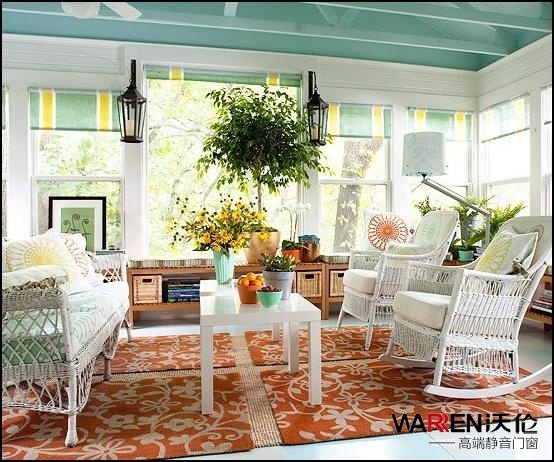
Every person who loves life has their own cherished "sunroom." After work, it’s the perfect place to unwind from a long day; on weekends, it offers a peaceful escape from the city’s hustle and bustle; and during holidays, it lets you savor the serene charm of a hidden paradise. Versatile and adaptable, the sunroom makes it effortless to celebrate National Day your way—whether you’re hosting guests, working out, tending to plants, enjoying a cup of tea, or diving into a good book. No need to crowd into crowded tourist spots—inside your sunroom, you can already feel the magic of poetry and distant horizons. With different arrangements, each visit brings a unique experience. And did you know? A sunroom isn’t just for one thing—it can serve so many purposes!
Currently, most doors and windows on the market are equipped with double-layer insulated glass, and the specifications of the insulated glass used can vary depending on the model. So, do consumers really need to have an in-depth understanding of insulated glass? Actually, all they need to know is the thickness of the glass and the type of material it’s made from. On the market, you’ll find two main types of glass: patterned glass and float glass—among which float glass is generally considered superior. Glass thickness typically ranges from 4mm to 5mm, and these two types remain the most common choices for insulated glass in doors and windows. When shopping for doors and windows, be sure to ask whether the insulated glass being used is made from float glass—and don’t forget to confirm the exact thickness as well!

2015-01-01
In winter, many residents in northern regions who rely on centralized heating often complain that their rooms aren’t warm enough—yet the radiators are actually set to a sufficiently high temperature. The real issue is that heat escapes too readily through doors and windows in their homes. Meanwhile, households in southern areas using air conditioning for heating are left cringing at their skyrocketing electricity bills. Interestingly, when it comes to temperature alone, energy-efficient windows and doors can make a noticeable difference of about 4°C compared to standard models. Did you know? Every year, we end up paying nearly twice as much for the inefficient windows and doors in our homes! That’s exactly how your hefty electricity bill adds up—simply because your home isn’t as energy-efficient as it could be. During the cold winter months, sealing doors and windows tightly may help reduce heat loss due to convection, but it won’t stop heat from escaping through conduction. As a result, your home continues to lose precious warmth—even with everything closed tight.
The broken-bridge aluminum inward-opening and inward-tilting window, also known as the broken-bridge aluminum casement-top-hung window, features a unique hardware system that allows it to function both as a standard casement window and a top-hung window. By simply operating the handle, the internal linkage mechanism is activated, enabling the window sash to either swing open inward or tilt inward at an adjustable angle for ventilation and air exchange. When in the top-hung position, this window design doesn’t occupy any indoor space, ensuring excellent airflow while also providing enhanced security against intruders. Additionally, cleaning the glass becomes effortless, as the window can be easily opened inward for access.

With societal development and rising living standards, residential environments are becoming increasingly high-end. In response, the concept of eco-friendly, innovative thermal-insulation profiles—originating from overseas—has now made its way into the domestic market. Major aluminum profile manufacturers have eagerly invested in importing advanced foreign equipment for manufacturing insulated "thermal break" systems, while domestic companies specializing in aluminum processing machinery have also begun developing their own thermal-break extrusion lines. All aim to introduce these cutting-edge, energy-efficient, environmentally friendly profiles to the market. Although customers generally embrace this as a sustainable, energy-saving solution, the production costs remain higher than those of conventional materials, involving processes such as oxidation, coating, and profile insertion. By integrating the thermal break through specialized connecting elements, it becomes possible to combine silver-white oxide finishes with vibrant colored coatings or textured surface effects.

A well-designed balcony can maximize a home’s architectural space, serving as the perfect spot for relaxation, entertainment, enjoying scenic views from above, drying clothes, or even creating a lush green oasis with plants. However, it also functions as a large "window" to the outside world, directly connecting residents to the outdoors. While lower-floor balconies may raise concerns about break-ins, higher-floor ones could face challenges from strong winds—making balcony window enclosures essential. But here’s the real question: which type of doors and windows should you choose? That’s where the real decision lies! Currently, most homeowners opt for either sliding or casement-style windows when enclosing their balconies. Both options come with distinct advantages, though they each cater to different needs. Keep in mind, however, that these recommendations are meant as general guidance only! When it comes to ventilation, casement windows with top-hung mechanisms also offer excellent airflow.
Contact Information
Address: Area A, Datang Park, Sanshui Industrial Park, Sanshui District, Foshan City, Guangdong Province
Warren Doors & Windows, South of Fangshan Road and West of Dongtai Road, Dongcheng Subdistrict, Linqu County, Weifang City, Shandong Province
Business Inquiries: BD@warren.net.cn
Join Us: BD@warren.net.cn
International Trade Cooperation: BD@warren.net.cn
National Customer Service Hotline: +86 400-676-9888
Beijing Customer Service Hotline: +86 010-68319888


Douyin

Xiaohongshu
E-mail:
Tel:
400:
The Little Red Book:
Tiktok:
WeChat:
在线客服添加返回顶部
页面顺滑的滚动
右侧在线客服样式 1,2,3 4
图片alt标题设置: Beijing Warren Doors and Windows Co., Ltd.
循环体没有内容时: Materials are currently being organized—stay tuned!
CSS / JS 文件放置地