

News and Information
News and Information

Nowadays,断桥铝 doors and windows are increasingly favored by homeowners, yet many people overlook proper maintenance, which ultimately shortens the lifespan of these products. To help you keep your windows and doors in top condition, here are 7 essential maintenance tips—let’s dive into them right away! 1. When cleaning your 断桥铝 doors and windows, **never step on the aluminum frame** or use it as a support by holding onto it. 2. The sealing rubber strips and glass sealant are crucial for ensuring the door/window’s airtightness, insulation, and waterproofing. If any of these components fall off, repair or replace them promptly to maintain their effectiveness. 3. For cleaning, use a soft cloth dampened with plain water or a mild, neutral detergent. Avoid using regular soap, laundry detergent, or harsh cleaning agents like scouring powders and toilet cleaners, as they can damage the surface. 4. Rain
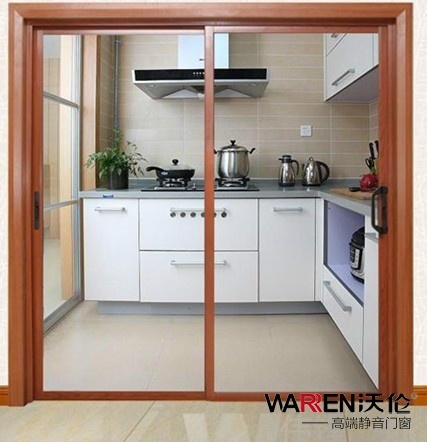
As the year comes to a close, it’s time to schedule your year-end big clean-up! Kitchen doors and windows are often covered in grease buildup, making them much trickier to clean than other interior doors and windows. That’s why mastering a few cleaning techniques is essential! But how can you quickly tackle those tough-to-clean kitchen sliding doors? After all, the door panels are the "face" of the entire sliding door system, so it’s best to regularly wipe them down with a soft, dry cotton or silk cloth—this prevents scratches on the surface. If there’s heavy grease buildup, you can use a mild, neutral cleaner to gently remove the grime, followed by drying the area thoroughly with a cotton cloth. And if minor scuffs do appear, simply apply a small amount of toothpaste to a soft cloth and rub gently until the marks disappear. When it comes to maintaining your kitchen doors and windows, always remember to use a dry cloth for cleaning—this helps keep them looking their best!

Due to architectural functional requirements, structural designs, spatial dimensions, and the aesthetic style of building facades, architectural doors and windows come in a variety of opening types—such as inward-swinging, outward-swinging, inward-opening with top-hung, inward-opening with bottom-hung, and more than ten other configurations. At the heart of these diverse opening mechanisms are the various door and window hardware components. Hardware accessories play a crucial role in the systematic design of energy-efficient windows and doors, directly influencing the performance and efficiency of the entire system.

The terrace sunroom is an area in the home that shouldn’t be overlooked—well-designed, it can significantly enhance your quality of life, offering the perfect spot for relaxation and leisure. So, what are some great design ideas for a terrace sunroom? Let’s take a look at a collection of terrace sunroom renovation examples, so you can enjoy a full meter of sunshine right at home! **Terrace Sunroom Renovation Case 1:** If your sunroom is designed for instant warmth and comfort, why not make the most of it by indulging in sunlight in the coziest way possible? This room features a spacious, comfortable large corner sofa—perfect whether you’re sitting or lounging. **Terrace Sunroom Renovation Case 2:** Compared to a balcony, a terrace sunroom is larger, yet smaller than a rooftop space. Transforming it into a narrow, elongated study area is an excellent choice. Above, consider using…

There are many specifications for broken-bridge aluminum alloy doors and windows, with the most common profiles including 55mm, 60mm, 65mm, 70mm, 75mm, and 80mm types. For window screens integrated into the frames, the mainstream options typically range from 80mm to 130mm—specifically, 80mm, 95mm, 100mm, 108mm, 125mm, and 130mm models. Indeed, the market prices for broken-bridge aluminum doors and windows can be quite chaotic. Just take the 55mm profile as an example: some are available for as low as 300 to 400 yuan per square meter, while others soar to 700 to 800 yuan—or even exceed 1,000 yuan per square meter. But what exactly causes such wide price variations? At first glance, these products look identical. So, where does the real difference lie?

Customization has become a major trend of our time, increasingly popular among people—ranging from personalized items to full-home customization. It caters to the unique needs of diverse individuals, aligning perfectly with contemporary lifestyles and the evolving standards of modern living. As someone who’s been in the "door and window customization" industry for over a decade, I’ve personally witnessed the remarkable growth of this market. Though door and window customization has been around for more than ten years, many people still remain unclear about the actual process! As a result, countless individuals unknowingly fall into common pitfalls along the way. Simply put, "door and window customization" refers to a service where customers provide their own measurements and preferred styles, and then work with a manufacturer or retailer to create tailored products that meet their specific requirements. Specifically, the customization process involves the following steps:

Good doors and windows all start with great glass. What are the magical benefits of installing LOW-E glass in your doors and windows? Let’s explore together. LOW-E glass, or low-emissivity glass, is created by coating the surface of the glass with a thin metallic film, reducing its emissivity (E) from 0.84 down to below 0.15. Here are the key features of LOW-E glass: ① It has high infrared reflectivity, effectively bouncing back far-infrared heat radiation. ② With its low surface emissivity (E), it absorbs minimal external energy, resulting in less heat being re-radiated. ③ It offers a wide range of shading coefficients (Sc), allowing you to precisely control the amount of solar energy that passes through—perfectly tailored to suit different climates and regions.

As the doors and windows market continues to heat up, the variety of products available is skyrocketing—offering everything from sleek, modern designs to traditional styles, all at wildly different price points. You might wonder: Why do two seemingly similar products end up costing so much more—or less—than each other? As the saying goes, "Insiders see the real value, while outsiders just enjoy the spectacle." A door or window is far more complex than it appears at first glance. In fact, its price is typically determined by a combination of factors. First, there are the **internal elements**, such as the materials used, craftsmanship, and hardware. Then there are the **external factors**—the services that come with the product, especially in the custom doors and windows industry. Things like design, precise measurements, and reliable after-sales support all play a crucial role in shaping the final cost of a high-quality, tailored product. So,

Windows are the "eyes" of a house, allowing rooms to receive natural light, ventilate, retain warmth, and block out noise. In the past, steel windows and older aluminum alloy doors and windows in traditional buildings often struggled to provide adequate insulation and sealing—especially after prolonged exposure to wind and weather, leading to warping that severely compromised their ability to keep heat inside. As a result, choosing windows with superior thermal performance and excellent sealing becomes particularly crucial during the winter months. 1. Aluminum-wood composite doors and windows feature an exterior section made from aluminum alloy profiles, finished with durable fluorocarbon coating that effectively resists UV rays and various forms of environmental corrosion. This allows for a wide range of colors and designs to suit homeowners' preferences. Meanwhile, the interior component is crafted from high-quality, premium wood processed through specialized techniques, with the wood surface coated using top-grade German-made paint.
2015-01-01
Doors and windows are the most basic fixtures in a typical home, and they also play the most critical role in influencing natural light, ventilation, and overall comfort. But are you familiar with the design standards for doors and windows? In residential buildings, the standard window sill height is generally required to be no less than 0.9 meters; however, if the sill height falls below 0.8 meters, protective measures must be implemented. In public buildings, window sill heights typically range from 1.0 to 1.8 meters. For windows that open onto public corridors, the bottom edge of the sash should be positioned at least 2.0 meters above the floor. As for window height, in standard residential buildings, the typical window height is 1.5 meters. Adding the window sill height of 0.9 meters brings the top of the window to 2.4 meters above the floor level.
Contact Information
Address: Area A, Datang Park, Sanshui Industrial Park, Sanshui District, Foshan City, Guangdong Province
Warren Doors & Windows, South of Fangshan Road and West of Dongtai Road, Dongcheng Subdistrict, Linqu County, Weifang City, Shandong Province
Business Inquiries: BD@warren.net.cn
Join Us: BD@warren.net.cn
International Trade Cooperation: BD@warren.net.cn
National Customer Service Hotline: +86 400-676-9888
Beijing Customer Service Hotline: +86 010-68319888


Douyin

Xiaohongshu
E-mail:
Tel:
400:
The Little Red Book:
Tiktok:
WeChat:
在线客服添加返回顶部
页面顺滑的滚动
右侧在线客服样式 1,2,3 4
图片alt标题设置: Beijing Warren Doors and Windows Co., Ltd.
循环体没有内容时: Materials are currently being organized—stay tuned!
CSS / JS 文件放置地