

News and Information
News and Information

With societal development and rising living standards, residential environments are becoming increasingly high-end. In response, the concept of eco-friendly, innovative thermal-insulation profiles—originating from overseas—has now made its way into the domestic market. Major aluminum profile manufacturers have eagerly invested in importing advanced foreign equipment for manufacturing insulated "thermal break" systems, while domestic companies specializing in aluminum processing machinery have also begun developing their own thermal-break extrusion lines. All aim to introduce these cutting-edge, energy-efficient, environmentally friendly profiles to the market. Although customers generally embrace this as a sustainable, energy-saving solution, the production costs remain higher than those of conventional materials, involving processes such as oxidation, coating, and profile insertion. By integrating the thermal break through specialized connecting elements, it becomes possible to combine silver-white oxide finishes with vibrant colored coatings or textured surface effects.

A well-designed balcony can maximize a home’s architectural space, serving as the perfect spot for relaxation, entertainment, enjoying scenic views from above, drying clothes, or even creating a lush green oasis with plants. However, it also functions as a large "window" to the outside world, directly connecting residents to the outdoors. While lower-floor balconies may raise concerns about break-ins, higher-floor ones could face challenges from strong winds—making balcony window enclosures essential. But here’s the real question: which type of doors and windows should you choose? That’s where the real decision lies! Currently, most homeowners opt for either sliding or casement-style windows when enclosing their balconies. Both options come with distinct advantages, though they each cater to different needs. Keep in mind, however, that these recommendations are meant as general guidance only! When it comes to ventilation, casement windows with top-hung mechanisms also offer excellent airflow.

Coated Glass for Heat Insulation and Cold Protection: For rooms exposed to morning or afternoon sunlight, you can opt for heat-absorbing coated glass on the exterior side, while using standard clear white glass on the interior side. Since heat-absorbing glass efficiently captures infrared light, it reduces the amount of thermal energy entering the room—helping to ease the load on air conditioning during summer—and, in winter, its ability to absorb infrared radiation raises its own temperature, effectively shielding the space from external cold. Coated glass comes in a variety of tinted options, giving you the flexibility to choose based on your home’s decor preferences. Frosted Glass: Translucent Yet Opaque Frosted glass, also known as satin glass, is created by treating the surface of ordinary flat glass with methods such as mechanical sandblasting, manual grinding, or etching with hydrofluoric acid solutions, resulting in a uniformly matte finish that diffuses light while maintaining opacity.

When it comes to断桥铝 (broken bridge aluminum) doors and windows, I’m sure everyone is already familiar with them. Beautiful in design, these products also offer excellent soundproofing and thermal insulation—making them incredibly popular among consumers! However, opinions on whether broken bridge aluminum is truly a great choice have always been divided: some people love its benefits, while others find it less practical. So today, let’s dive deeper into what makes broken bridge aluminum so special, hoping this will provide valuable insights for your home renovation project! Without further ado, let’s take a look together! **Introduction to Broken Bridge Aluminum:** Broken bridge aluminum is a type of window material that excels as an insulated aluminum product. Compared to conventional aluminum, it boasts significantly superior performance, making it ideal for a wide range of applications across various industries.
Many people often ask this question: How big should an outward-opening window sash be? Are there any design standards or national regulations governing this? And how do we calculate the strength of the window sash? In our experience with window designs, we’ve encountered numerous unsuccessful cases—most commonly involving either windows that are too small or ones that are too large. Both scenarios refer to the window’s opening sash: If the sash is too small, ventilation becomes poor, leading to inefficiencies in energy use and making the space uncomfortable for living; on the other hand, if the sash is excessively large, it can become cumbersome to open and close, potentially even compromising safety during operation. 1. A window that’s too small—ventilation The issue of having an overly small window sash is relatively easy to address.
2015-01-01
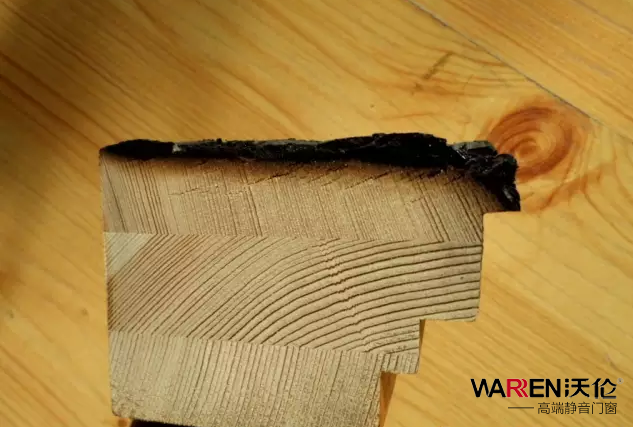
Before reading this article, let’s first clarify that fire resistance and fireproofing are entirely different concepts. According to experts from the American Institute of Timber Construction, absolutely fireproof buildings simply don’t exist. In fact, most building materials—including those commonly found inside structures—are combustible. Often, it’s not the structural components but rather the items stored within a building that pose the most serious threat to both life and property during a fire. As a result, the safety design focus for building materials has increasingly shifted from "fireproofing" to "fire resistance." Now, let’s take a closer look at how various door and window profiles perform in terms of fire resistance under real-world fire conditions.

Custom-made doors and windows have become a modern trend, with consumers opting for custom solutions now making up nearly half of the market. However, the rapid rise and fast-paced growth of this industry have made it challenging to establish standardized guidelines, leading inevitably to a mix of high-quality products and outright scams. Given the relatively high entry barrier for custom window and door manufacturing, some less-established companies are taking advantage of the situation to disrupt market norms—often passing off inferior products as superior ones. So, what should consumers keep in mind when choosing custom-made doors and windows? After all, your windows and doors should truly reflect your personal style and preferences! Nowadays, more and more homeowners are embracing the idea of selecting their preferred designs and styles upfront—and then having them custom-made—before starting their home renovations. Yet, the industry’s quick expansion has outpaced the availability of skilled, professional designers, leaving many consumers struggling to find reliable expertise.

As people’s living standards continue to rise, so do their expectations for where they live. Consequently, demand is steadily increasing for high-end apartments and villas—often priced at several million or even over ten million yuan. Yet, despite living in homes that perfectly match your preferences in both environment and design, you may still find yourself facing these subtle yet persistent challenges: As night falls, you carefully close the bedroom windows, ready to drift off into a peaceful sleep—but the constant honking of car horns and the bustling chatter of crowds outside keep interrupting your rest, making it impossible to unwind fully… And on chilly winter nights, even with the heater cranked up to its highest setting, you still can’t shake the feeling of being uncomfortably cold, especially when standing near the windows, where a distinct draft seems to seep right through.
Window and door renovation is a crucial step in home remodeling. Choosing high-quality decorative panels for installation not only enhances the aesthetic appeal of your home but also ensures optimal ventilation and natural lighting. Below, our editor will walk you through three common misconceptions about window and door renovations, helping you avoid potential pitfalls during the process. Misconception #1: Many consumers are tempted to convert their balconies into kitchens after enclosing them, believing this will maximize usable space. However, this approach actually compromises the home’s overall airflow and ventilation, making it harder for cooking fumes to dissipate. Over time, this can lead to lingering odors and even buildup of grease and grime.

A bay window is a unique little corner in your home, perfect for relaxing or even hosting guests. But how much do you know about the possibilities of transforming your bay window? Today, we’re sharing several creative bay window makeover ideas—there’s bound to be one that suits your style! Turn it into a cozy little balcony for gardening: Most plants thrive in sunny spots, and while balconies are ideal for growing greenery, even a small bay window indoors can help you create a vibrant, life-filled nook. In the bedroom, use a partition to design a compact storage unit right at the bay window. Not only does this maximize space, but you can also add a few小巧な観葉植物を飾って、窓周りに自然の息吹と活力を演出しましょう。 Or transform it into a mini study area: Positioning your desk by the window creates a serene spot for reading and working, bathed in natural light.
Contact Information
Address: Area A, Datang Park, Sanshui Industrial Park, Sanshui District, Foshan City, Guangdong Province
Warren Doors & Windows, South of Fangshan Road and West of Dongtai Road, Dongcheng Subdistrict, Linqu County, Weifang City, Shandong Province
Business Inquiries: BD@warren.net.cn
Join Us: BD@warren.net.cn
International Trade Cooperation: BD@warren.net.cn
National Customer Service Hotline: +86 400-676-9888
Beijing Customer Service Hotline: +86 010-68319888


Douyin

Xiaohongshu
E-mail:
Tel:
400:
The Little Red Book:
Tiktok:
WeChat:
在线客服添加返回顶部
页面顺滑的滚动
右侧在线客服样式 1,2,3 4
图片alt标题设置: Beijing Warren Doors and Windows Co., Ltd.
循环体没有内容时: Materials are currently being organized—stay tuned!
CSS / JS 文件放置地