

News and Information
News and Information

What are door and window casings? Many friends who are new to home renovation aren’t quite sure. And how exactly should you approach the process of making door and window casings? Today, let’s learn together. As the year draws to a close, many people are rushing to complete their home renovations—my circle of friends is no exception, with several already preparing to give their homes a fresh, festive makeover for the holidays. However, since most of them are dipping their toes into home decorating for the first time, they’re often confused about what exactly door and window casings are. So, let me explain: Door and window casings serve both protective and decorative purposes, encasing the frames of doors and windows. Typically, they consist of two main components—the casing board (also known as the "cylinder board") and the face molding—and are seamlessly integrated with the surrounding walls.
Building doors and windows represent the weakest link in a structure's thermal performance, accounting for 49% of the total energy consumption within a building's envelope. As living standards continue to rise, it has become increasingly common for indoor spaces to rely on cooling or heating systems to create comfortable living environments. Since doors and windows are key components of a building's exterior envelope, they directly influence the overall energy efficiency of the structure. Enhancing the thermal insulation of doors and windows is therefore a critical strategy for reducing a building's energy consumption. Today, the decision to install energy-efficient doors and windows is drawing growing attention from both homeowners and industry professionals. Meanwhile, with the introduction of national energy-saving regulations and building energy-efficiency standards, energy-efficient doors and windows have also captured significant interest across the construction sector.

In building energy efficiency, the role of doors and windows cannot be underestimated—indeed, high-quality door and window hardware is essential in ensuring top-notch performance. As a result, the importance of door and window hardware in achieving energy-efficient buildings is increasingly being recognized. Building experts emphasize that evaluating whether a structure is truly energy-efficient involves assessing whether it maximizes resource conservation throughout its entire lifecycle—covering energy savings, land use efficiency, water conservation, and material optimization. It also hinges on whether the building protects the environment, minimizes pollution, and provides occupants with healthy, highly functional spaces. Ultimately, the degree to which a building fosters harmonious coexistence with nature directly influences its energy performance. And as an integral component of doors and windows, hardware plays a critical role in delivering seamless functionality and durability to these essential architectural elements.
How important are energy-efficient doors and windows in reducing a building's overall energy consumption? Industry experts highlight that, currently, building energy use accounts for about 40% of society’s total energy consumption. As the primary areas where buildings let in natural light, doors and windows are also their weakest points—energy lost through these openings makes up 45% to 50% of a building’s total energy usage, accounting for roughly 20% of society’s overall energy consumption. From a safety perspective, the majority of home burglaries occur when intruders gain entry via exterior doors and windows. Such incidents can range from minor property theft to serious physical harm, often linked to the common issue of flimsy exterior door and window profiles, basic glass installations, and inadequate hardware. That’s why choosing high-quality, reputable doors and windows is crucial for both energy efficiency and security.
Wood-grain transfer profiles are created by applying high-temperature sublimation and heat-penetration techniques—based on powder coating or electrophoretic painting—to rapidly transfer and deeply embed wood-grain patterns from transfer paper or film onto pre-coated or electrophoretically treated aluminum profiles. This process ensures that the resulting wood-grain profiles feature crisp, lifelike textures with strong three-dimensional effects, perfectly capturing the natural essence of wood grain. As a result, these profiles serve as an ideal, eco-friendly, and energy-saving alternative to traditional timber materials. Moreover, the wood-grain finish exhibits exceptional adhesion to aluminum surfaces, is completely non-toxic, odorless, and easy to clean. The product boasts vivid, highly realistic wood-grain patterns that stand out with their pronounced depth and visual appeal, delivering a natural, earthy aesthetic that evokes a deep connection to nature.

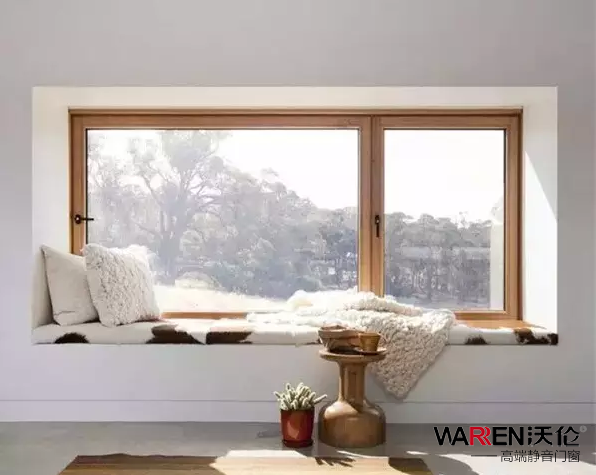
效果图.jpg (71.34KB, Downloads: 75) Download Attachment | Uploaded on 2015-12-21 10:52 When choosing windows, consumers should opt for models with excellent energy-saving and thermal insulation properties. Energy-efficient, insulated windows help keep the heat out during summer, reducing the electricity consumption of air conditioners, and retain warmth indoors during winter, thereby minimizing energy use and costs associated with heating. If your primary concern is not high insulation, a single-pane window may suffice. However, if you require superior thermal performance—especially when utilizing your balcony to maintain a comfortable indoor temperature—a double-pane window would be the more suitable choice.
How can you tell if a door and window sealant strip is good quality? 1. **Judging by Appearance**: First, examine the surface of the sealant strip. It should look shiny, smooth, free of impurities, bubbles, or jagged edges. When you run your hand over it, it should feel细腻 (delicate), soft, and smooth—this is the most basic way to assess its quality. Visually inspect the surface for shine, evenness, cleanliness, absence of bubbles, and lack of serrated patterns. In contrast, inferior sealant strips made with soft PVC often appear rough, lack luster, and may even show significant deformation. 2. **Judging by Feel**: High-quality sealant strips offer a细腻 (delicate) and柔软 texture when touched, while lower-grade ones feel grainy and粗糙, lacking the desired suppleness.
1. When cleaning break-bridge aluminum doors and windows, as well as aluminum-clad wood doors and windows—including glass panels, frames, and sashes—use a soft cloth dampened with clean water or a mild detergent. Avoid using ordinary soap or laundry powder, and never opt for harsh, highly acidic or alkaline cleaners like scouring powders or toilet bowl cleaners, as these can corrode the surface of the profiles. This ensures that the glass and frame components remain scratch-free. 2. Every three months, thoroughly clean the grooves at the window sash joints and the sliding rail areas to prevent dust, sand, and other debris from interfering with the smooth operation of hardware components. You can use a soft brush or a vacuum cleaner for this task. Additionally, after rainy days, promptly wipe dry any moisture on the glass and window/door frames to avoid potential damage. 3. When cleaning aluminum doors and windows
2015-01-01
The raw materials for powder coating include polyurethane, polyurea resin, epoxy resin, hydroxyl polyester resin, and epoxy-polyester resin, allowing for the creation of a wide variety of colors. Powder coating boasts several key features: application can be done manually or via automated overhead systems, making it easy to implement. The coating typically achieves a thickness of 30 microns or more, offering excellent resistance to impact, abrasion, corrosion, and weathering. Additionally, the cost of powder coatings is lower compared to fluorocarbon finishes. However, one of the major drawbacks of powder coating is its vulnerability to prolonged exposure to sunlight and UV radiation. Over time, this can lead to natural fading, particularly noticeable in window and door profiles—especially on the sun-facing sides versus those less exposed. In many cases, significant color differences become apparent within just 2 to 5 years. Currently, the market offers a range of colored aluminum products that address some of these limitations.

2015-01-01
Many people dream of creating a home environment that’s warm in winter and cool in summer. Yet, traditional window and door materials have a critical flaw—they fail to effectively block heat exchange between indoors and outdoors, often resulting in chilly winters and sweltering summers instead. Fortunately, this common frustration is now a thing of the past, thanks to the emergence of an exceptional new material: thermal-break aluminum. Windows and doors crafted from this innovative material finally eliminate the shortcomings of conventional designs, making the long-held dream of a comfortable, temperature-controlled home a reality! The secret lies in its ingenious "thermal break" structure. This unique design is what gives thermal-break aluminum its outstanding insulation properties, allowing it to keep homes cozy in winter and refreshingly cool in summer.
Contact Information
Contact Address: No. 7, Industrial Avenue East, Songxia Industrial Park, Shishan Town, Nanhai District, Foshan City
Warren Doors and Windows, south of Fangshan Road and west of Dongtai Road, Dongcheng Subdistrict, Linqu County, Weifang City, Shandong Province
Become A Deaters :Info@wolunmc.com
National customer service hotline:+86 400-676-9888
WhatsApp:+86-18866798677
Beijing customer service phone number:+86 010-68319888


Douyin

Xiaohongshu
E-mail:
Tel:
400:
The Little Red Book:
Tiktok:
WeChat:
在线客服添加返回顶部
页面顺滑的滚动
右侧在线客服样式 1,2,3 4
图片alt标题设置: Beijing Warren Doors and Windows Co., Ltd.
循环体没有内容时: Materials are currently being organized—stay tuned!
CSS / JS 文件放置地